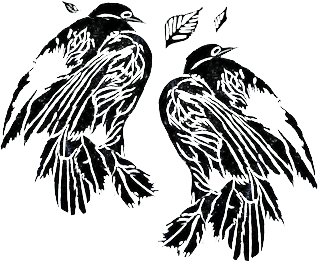
In memory of Sam Keen, 1931-2025
Every birthday until I was fourteen, I wished for wings. I would push out my scapulae, visualizing the feathers pricking through my skin and growing outwards until large wings unfurled. I wished for wings so hard that it hurt. Despite myself, despite understanding the confines of my own biology, I was bitterly disappointed the day after every birthday. I looked at birds – their effortless soaring, their apparent release from gravity – with a deep and pointed envy.
I don’t remember when or why precisely the dream of wings began. It has been buried within me, indelible, for as long as I have known myself. This is not a story of escapism – I was not running from an unhappy home, nor some great sadness. My childhood was filled with warmth and love and play. I was, however, according to my family, a yearner. As a young child I would stand with my face pressed against the bars of our gate in the urban sprawl of Johannesburg and look out at the walls and gates and concrete and brick and imagine myself rising up above the city. I pictured myself flying far, far beyond the outer bounds of Johannesburg and farther still, until concrete gave way to wild bushland, until mountains rose up to meet me. Years later, I would read Romeo and Juliet, and one line would stick fast, instantly memorized: “With love’s light wings did I o’erperch these walls[.]”
As a child, the limitations of the human form disappointed me. It was unfair that evolution had conspired against us while giving birds the capability for flight. Flying seemed the most tangible form that joy could take – complete exhilaration. If I only wanted it hard enough, yearned painfully enough, then maybe my body might metamorphose, changed by pure will. And so, I wished for wings.
When I turned fourteen my inner teenage critic silenced that recurring wish. That was silly and childish, and it was embarrassing that even a fraction of me believed that wish might come true.
********
It is not uncommon to dream of flight, of being unfettered and aloft. Sam Keen (philosopher, professor, author, and trapeze artist) speaks of the human spirit as longing to be airborne whilst contained in a body that is earthbound. Our preoccupation with flight is evident even in the opposition between these two words: airborne and earthbound. One is a gentle uplifting, the other a recalcitrant containment.
The Greek myth that most captured my imagination as a child was that of Daedalus and Icarus. The great inventor, Daedalus, and his son, Icarus, are held captive by King Minos of Crete. They cannot escape by land or by sea; both routes are blocked by the king. Brookes More’s translation of Ovid’s Metamorphosis tells us that their only way out is through the “unconfined skies.” Daedalus crafts two pairs of wings from feathers and wax. While his father works, Icarus chases after the feathers that are caught by the breeze and toys with the wax, softening it, unaware of his father’s deepening anxiety about the dangerous journey ahead. When the wings are finished, Daedalus slips them on and they beat “with bird-like ease.” As he fits the second pair of wings onto Icarus’ back, Daedalus instructs his son to follow his course without deviation. His hands shake and his cheeks are wet with tears as he leads his son into the open air. They take flight and soon put Crete behind them. Far below, onlookers gaze up at them astonished, believing them to be deities. Icarus becomes careless, bolstered by conceit. He strays from his father and flies higher, reaching for the velvet skies. But he flies too close to the sun: the wax is melted from his back and his wings disintegrate. He calls out for his father as he falls, but by the time that Daedalus turns, his son’s body is lost to the sea.
I was contemptuous of Icarus, of how he squandered his ability to fly. If I had wings, I wouldn’t let the sun melt them away. I would have followed Daedalus’ instructions: “I caution you to keep to the middle way, for if your pinions dip too low the waters may impede your flight; and if they soar too high the sun may scorch them. Fly midway. Gaze not at the boundless sky[.]”
The lesson is simple. Stay the course. Do not be seduced by the excesses of freedom and longing. Do not be led by pride. As a child, I did not care for the lesson of the myth – I saw the instructions as the means to an end. If you follow these rules, you will be able to fly. Literal-minded, I cared far more about the wings themselves. I sketched flying-machine wings, filling pages with drawings, intent on recreating Daedalus’ wax wings with modern materials. I tested the wind resistance of fabrics, umbrellas, plastic bags by jumping off chairs or walls. I never jumped off anything high enough to cause myself injury, perhaps because a part of me never truly believed that I would fly. Nothing worked. Being earthbound was a curse. Everything in me ached for flight.
Despite my disdain for Icarus, I kept returning to the myth, lingering on the lines that implied his delight. “Proud of his success, the foolish Icarus forsook his guide, and, bold in vanity, began to soar, rising upon his wings to touch the skies.” I understood that impulse; I also wanted to know the ether’s texture against my fingertips. The story’s moral loosened; Icarus’ actions were not motivated by hubris. Compassion streamed through me. Maybe, after being imprisoned, I too would not be able to resist the feeling of the air on my face and the sun on my back, would not be able to tear my gaze from the boundless sky. Maybe I would also lose myself in the joy of flight, so much so that I would fly too close to the sun.
Perhaps, if not a cautionary tale, this myth is a love story. A father so loved his son that he built wings to give him freedom, and the son so loved the wildness of flight that it consumed him. And who among us can say that we do not know that love can be consuming?
********
In high school, I gradually forgot about my obsession with wings, although it reared its head in unexpected and subconscious places. For a carnival outfit, I made a pair of massive wings with each feather cut and painted individually, unknowingly mimicking Daedalus, who “fashioned quills and feathers” and “bound with thread the middle feathers, and the lower fixed with pliant wax; till so, in gentle curves arranged, he bent them to the shape of birds.”
I gave a speech in class on a Celtic fairytale where a woman was turned into a swan, gaining the power of flight. She was never returned to human form. “What draws you to that tragic myth?” my teacher asked, and I, perplexed by the question, did not know what to say. I didn’t understand why she would call it a tragedy. Nor could I retrace the places where the story might bleed into my own desires. My longing for flight had been exiled to the fringes of my psyche by skepticism and teenage self-consciousness.
And then, when I was sixteen, I saw a circus performance and could barely watch the young trapeze artist, so painful was my rekindled ache for flight. The Celtic story of the swan-woman came back to me, and I was flooded with want. The story was one of exhilaration, the breaking from a confined form, the promise of freedom. I found a flying trapeze class, and my cousins and I paid for an hour of flying on a huge rig in a field in Cape Town.
I climbed the ladder – undeterred by the rust that had eaten away at the metal rungs – and waited on the platform, my body shuddering with fear. Ten meters is high up. And very far to fall.
********
As any trapeze artist will tell you, before you can fly, you must learn how to fall. If you fall wrong, you can seriously injure yourself or even die (both of which would preclude you from ever flying again). Trapeze artists will also tell you that you fall where you look. If you are staring down at the net, your body will twist in the air to face downward, and you will fall – painfully and dangerously – face-first. If you look around you, you will fall strangely on your side. But if you look up, through the swinging trapeze bar to the unconfined skies above, your body will fall safely and softly into the net, as if into a pair of outstretched, waiting hands.
********
When I finished school, I was determined not to go to university. I wanted to join the circus and become a trapeze artist. My poor father despaired. He wanted his children to get a good education, to have as many opportunities for learning and career development as possible. It pained him, I think, to watch me pursue an uncertain path that might take me too close to the sun.
Despite my dad’s concerns, I took a year off, worked, and visited Sam Keen in Sonoma, California. Sam had started trapeze in his early sixties and had been flying for two decades by the time that I arrived. He had started a trapeze school on his farm, and a beautiful full-sized trapeze rig stood near a patch of forest on the property. In the back apron of the net (the section of net behind the catcher’s bar that curves upwards to prevent any wayward flyers from falling off the rig), an enormous Canadian flag bore down on the trapeze artists. In the house, another practice bar hung over the lounge. Marek, the instructor (and the Canadian whose flag hung on the trapeze), coached me through the familiar forms of basic swings, hangs, and leaps. “Keep your eyes open!” he called, again and again. “You’re going to smack into the catcher!” I made jump after jump off the platform with my eyes closed, overwhelmed both by the exhilaration of flying and the desire to block out the void below.
Flying was so far beyond my ordinary bodily experiences (and the adrenaline rush so great) that I felt like I had transcended corporeality. I thought of the ploughman, fisherman, and shepherd looking up at Icarus and Daedalus, who “astonished might observe them on the wing, and worship them as Gods.”
After classes, I would go back to the practice bar in the house and repeat the motions, dropping into knee hangs and reaching for an absent catcher, rubbing my hands raw on the rough grip of the bar. Sam and I watched video clips of professional trapeze artists together – him pointing out the great artists like Tony Steele and Miguel Vazquez, and the innovations of newer acts like the Flying Cranes; me watching wide-eyed, trying to inhale the trapeze expertise. Sam gave me a copy of his book, Learning to Fly, which became a sacred text in my worship of the flying trapeze. The inscription is simple, penned in a wide, looping hand:
Dear Andrea
Keep flying
Sam Keen
That experience of the trapeze in Sonoma was transubstantial. I was spirit made flesh and matter made immaterial. For a few exquisite moments, I had been airborne, and that had left me with a lightness that did not dissipate back on solid ground. Cupped in the nets of the trapeze, I had found Icarus’ boundless skies. Here, I felt his exhilaration, his abundant joy, captured in the moment before the sun and waves conspired against him. This was the freedom and joy that I had yearned for since I was a child.
When Icarus falls from the sky behind his father, Daedalus turns and, not seeing his son, cries out, “Where are you, Icarus? Where are you? In what place should I seek you, Icarus?” I want to tell Daedalus to search for Icarus on the trapeze, where the warmth of the sun cannot melt away the swing, and the spray of the sea cannot reach the net. I find his spirit there, as my hands slip free of the bar, flying with me, suspended midair.
********
When I returned from California, my dad and I began serious negotiations. I wanted to join the circus – I was terrified of missing out on my “physical prime,” terrified of being trapped in a different path, never able to return to trapeze. Quietly (ashamedly), I worried that if I gave up trapeze I would be letting go of the thing that made me interesting. My dad was adamant that I attend university. He had practical concerns about the usefulness of certain skills in the job market. Our negotiations grew fraught; stubbornness runs in the family. His rationale was strong, and everyone around me agreed that university was the correct choice. The dominant narrative that came from my culture and community told me that loving something is not enough, that joy is not enough, that exhilaration must be curtailed in service of safety and certainty. I applied for a Bachelor’s degree.
Despite myself, I really enjoyed university. I hadn’t realized how much I would revel in the intellectual engagement of it all, in the depth and breadth of knowledge that was offered. I became preoccupied with matters of the mind instead of those of the body and spirit.
There, I found something else that scratched the trapeze itch: contemporary dance. In contemporary, there are two central ideas. The first is that the rigid lines of ballet are created and broken, over and over again. The body is extended into beautiful lines – limbs straightened, vertebra stacked, neck lengthened, chin lifted – before crumpling – limbs bending/spine curving/head and hands drawing inward. The second is that contemporary’s movements build a flowing cycle of resistance and subsequent surrender to gravity: expansion and contraction; suspension and collapse. Expressed in contemporary, as in trapeze, is the desire to be free from the confines of gravity, as well as the same ineluctable return to the ground. Where the trapeze artist is momentarily airborne before returning to the net, the contemporary dancer suspends their body against gravity before being pulled, liquid, to the floor. For trapeze artists, gravity is an inconvenience, whereas contemporary dancers have a love affair with it. For the dancer, the earth is a place of return, a place of softness. The inverse, but not necessarily the antagonist, of the suspended airborne state.
********
I have not flown for a long time. The last time I did trapeze, a few years ago, I was so rigid from the fear of flying/falling, that I tore an abdominal muscle on the first swing. I drove myself home, wincing with every gear change, betrayed by my body and mind, my stomach muscles that wouldn’t hold, and my fear that made the swing into a wrench.
I stopped thinking about Icarus and his unconfined skies, about his invitation into joy. I chose to pursue a career in academia, putting mind above spirit and body once again. I completed my Masters, and relegated trapeze to an interesting fact about another version of myself.
Recently I have been dreaming of the trapeze again, both good dreams and bad.
In one, I was in a big, derelict barn, with an ad hoc trapeze tethered to the ceiling beams. A crowd had gathered. I knew I had to fly for them, but the trick that I needed to perform was difficult and there was no catcher and no net. I gripped the bar with ice-sweat hands as the audience waited for me to jump into the abyss, with no hope of a soft landing. I woke with small crescent-moon indents in my palms from nails clenching through an imaginary bar.
I am moving, leaving my home in South Africa again, returning to a place with which I have a fractious relationship. Up in the far North, above the Arctic circle, it is a place that I love deeply, but also one that poses challenges for a South African who is ill-equipped for polar extremes. A leap of faith, perhaps. Is it crude to reduce the leap from the trapeze platform to such an analogy? I never jumped off the platform, in my dream. I am not sure if that matters.
I have been dreaming of the trapeze again, both bad dreams and good.
Some nights find me retracing the path of the trapeze swing, reliving the action of it. The climb to the platform. The feeling of the heart in the throat. The wiping of sweat from palms before they close on the bar; the heaviness of the bar in hand. The deep breath and lifted gaze, fixed on the far end of the trapeze rig. The call from the instructor, “Hep!” as if heard under water, telling one to jump. And then, as feet leave the platform, the evaporation of fear and the joyfulness of play; the contraction of the abdominal muscles to pull the legs up at the end of the swing to increase its range, the body as an extension of the trapeze itself; the sustained muscle tautness as the swing reverses, waiting for the moment to beat back with the legs so as to propel the body into a seven-shaped posture above the platform. And then, the flinging of legs toward the bar, catching it behind the knees for a knee hang, or at the feet for bird’s nest, or even to extend the legs through into upside-down splits.
And finally, the moment that the trapeze artist lives for. The brief, incandescent moment of letting go of the bar and sailing across the abyss, hands outstretched, searching for the open arms of the catcher.
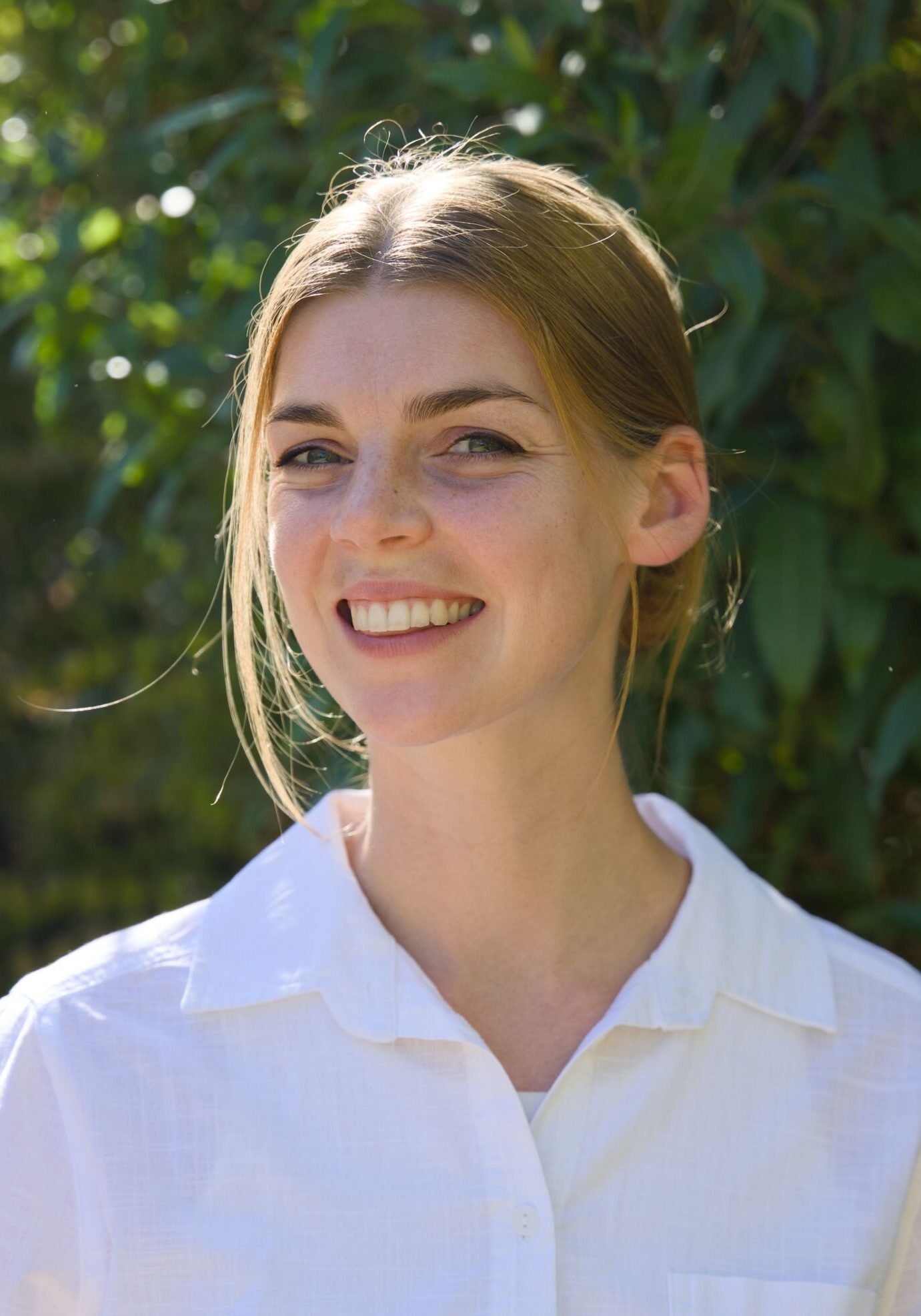
Andrea is a linguist and writer from South Africa. She writes personal essays, essays about nature and landscape, the occasional poem, and some academic work too. When not at her desk writing, Andrea can be found either in a dance studio or out in the mountains near her home in Cape Town.